
I have a upcoming drum recording session for which I have to choose the drum mics. In particular the snare and tom mic choice is mostly dependend on how much the mic can suppress the cymbal bleed. Common knowledge is to choose a pickup pattern where the nulls match the bleed sources.
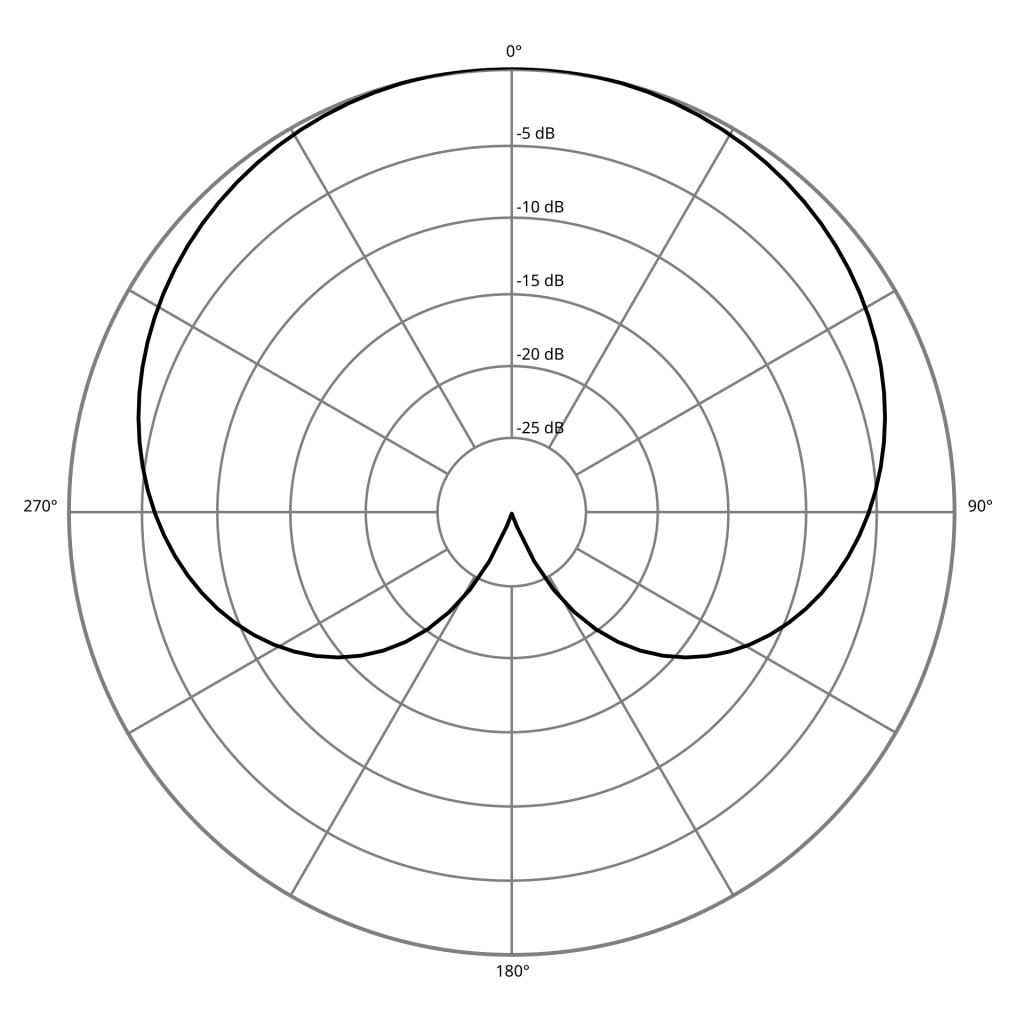

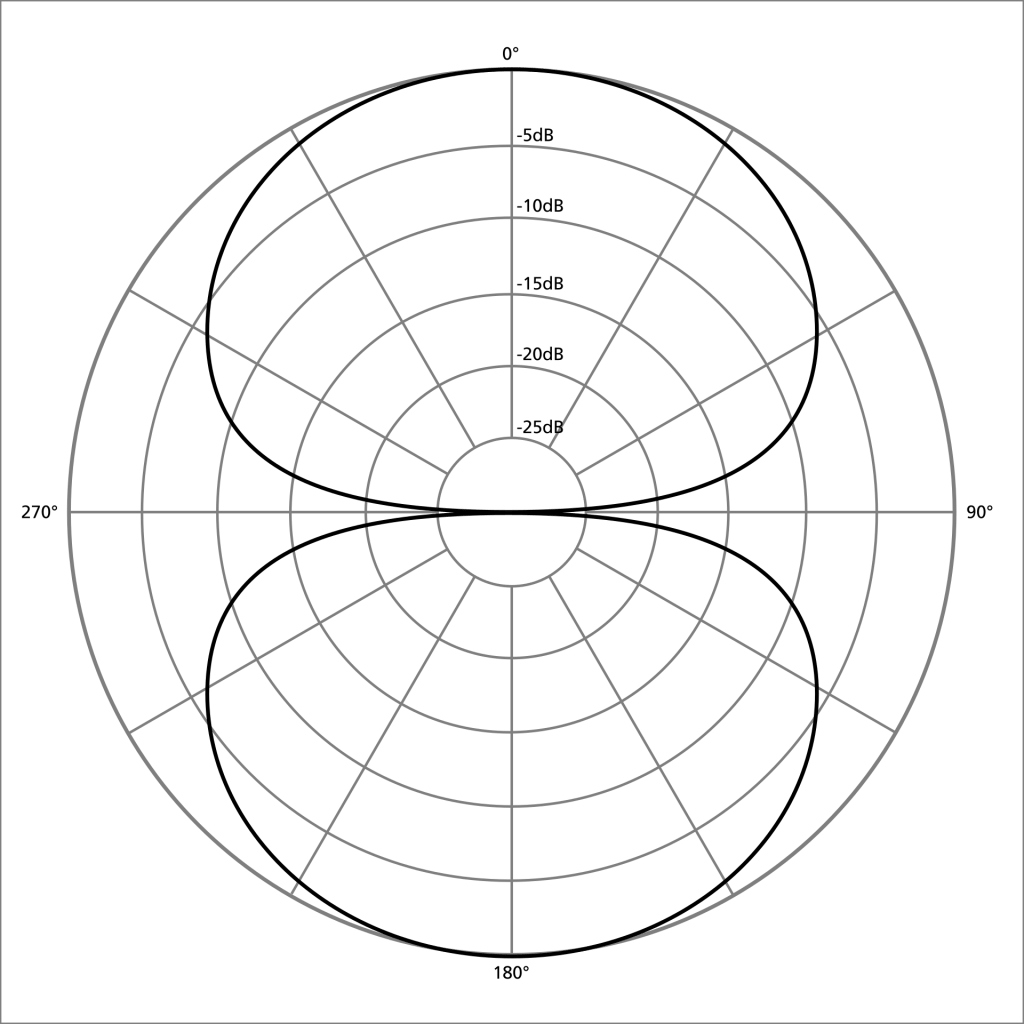


Images in courtesy of https://de.wikipedia.org/wiki/Richtcharakteristik
However these polar patterns are frequency dependend and manufactures rarily provide all of the necessary information make a decision. That’s why we end up with so many comparison videos on YouTube with less than ideal setups.
In the world of loadspeakers we have solved the display of directivity characteristics with isobaric charts.
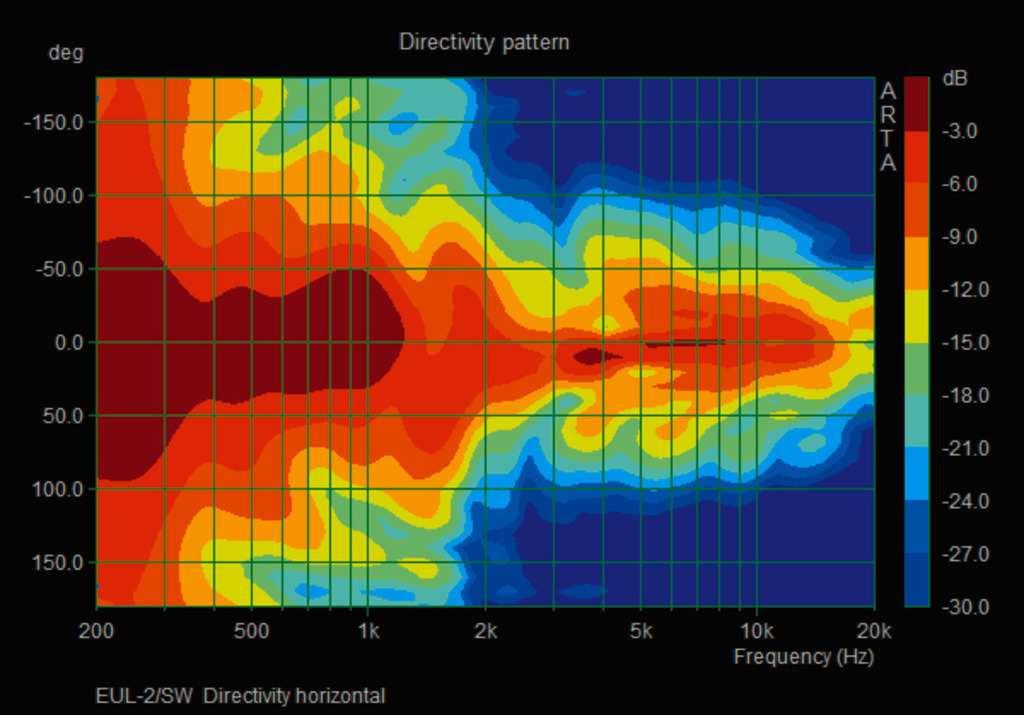
It shows the frequency response across the angles in one plane.
So I measured that frequency response of the mics I had available to me in a quasi anechoic way. The measurement setup:
JBL LS305 Studio Monitor at about 1.5m from the microphone (DuT) with approximately a 3,5ms measurement window. This limits the measurement to frequencies above about 400Hz – which is enough since my focus is cymbal bleed. The measurements are also normalized across the on-axis response. The reason is that, only when the on-axis frequency response is equal, we can compare the directivity. I imagine that any source will be equalized to taste in a mix context. The exeption will be the Lauten Audio LS308 and the Avantone with the super chardiod capsule.
I also was veeeeery lazy, as I only measured in 45° steps(0°, 45°, 90°, 135°, 180°) horizontally. This is not nearly enough to interpolate with accuracy (10° are kinda standard). However this is an initial investigation if these kind measurements can provide useful information, I consider it a proof of concept.
With out further ado, here are the measurements:
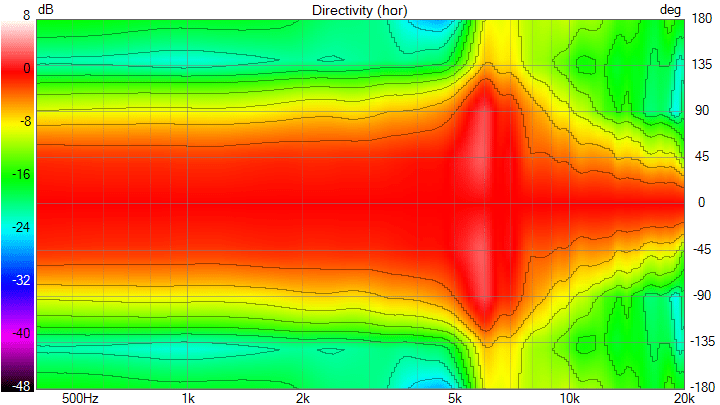

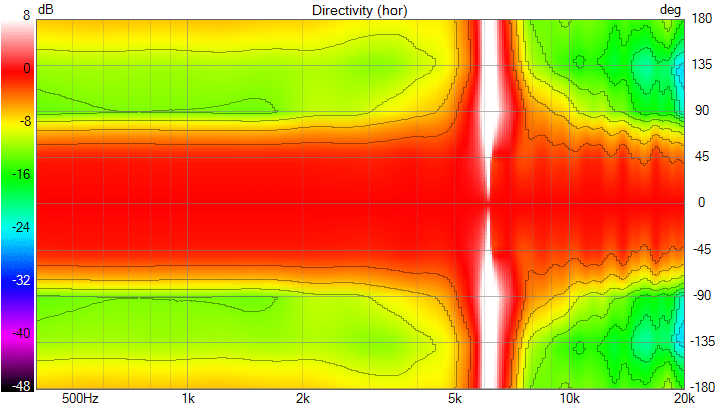
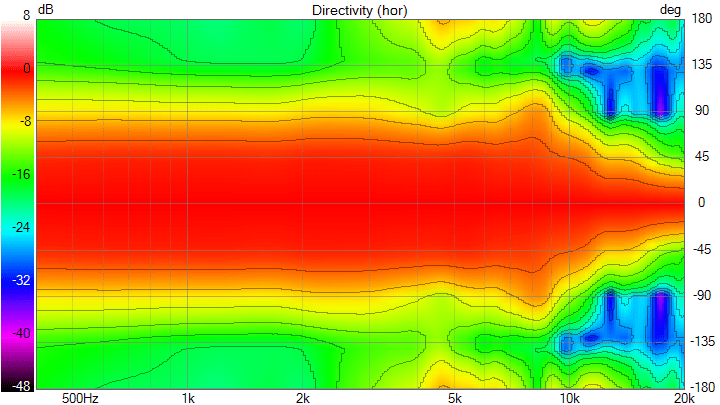
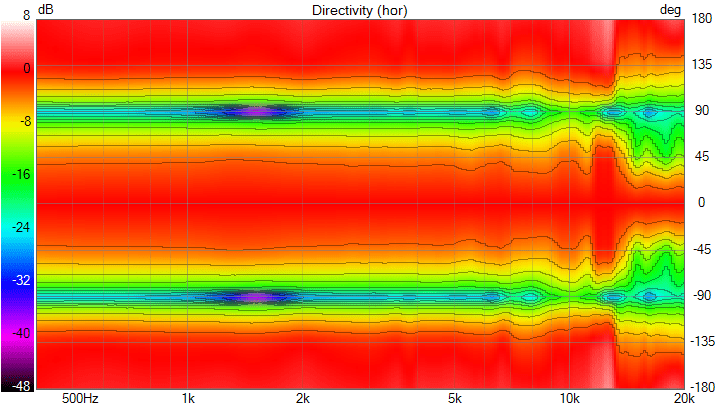

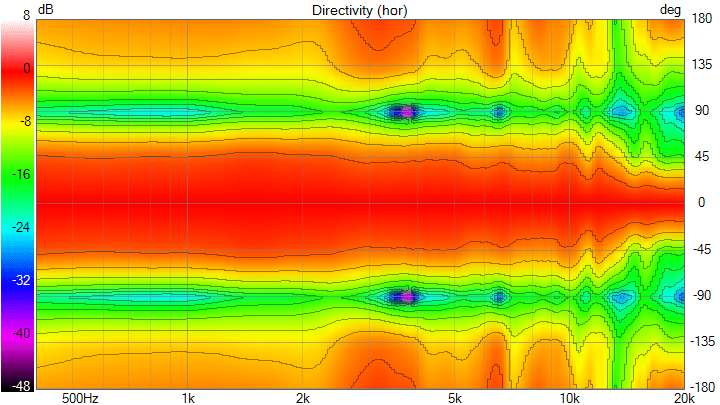
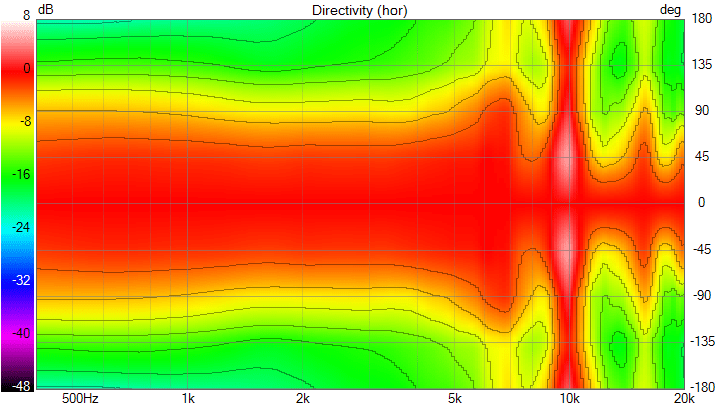

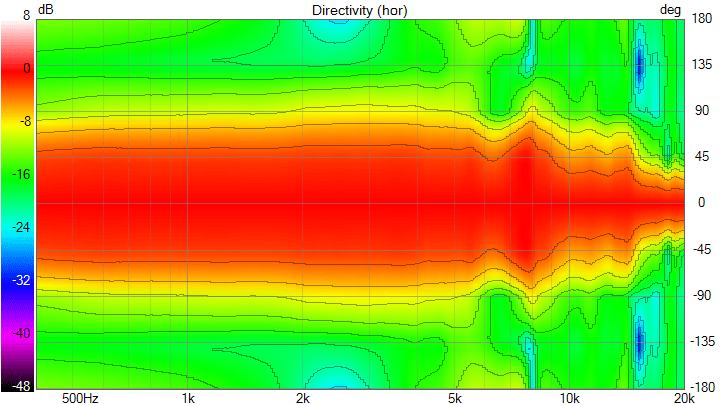
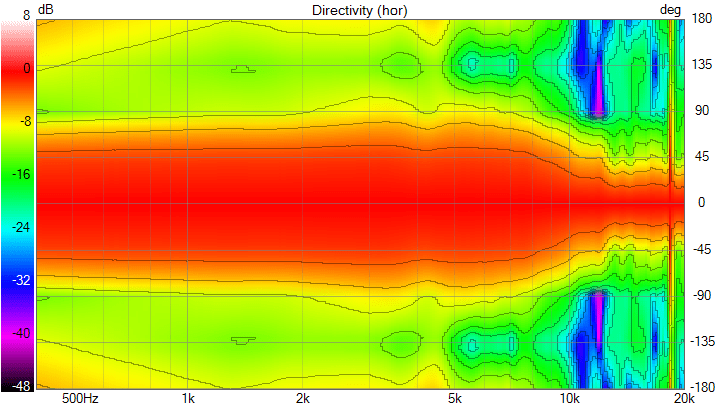
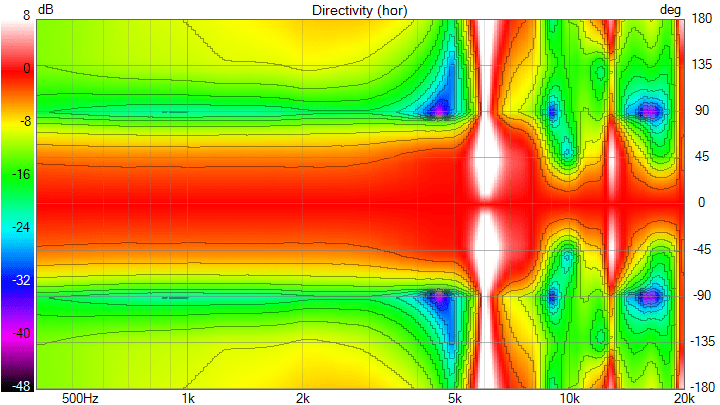


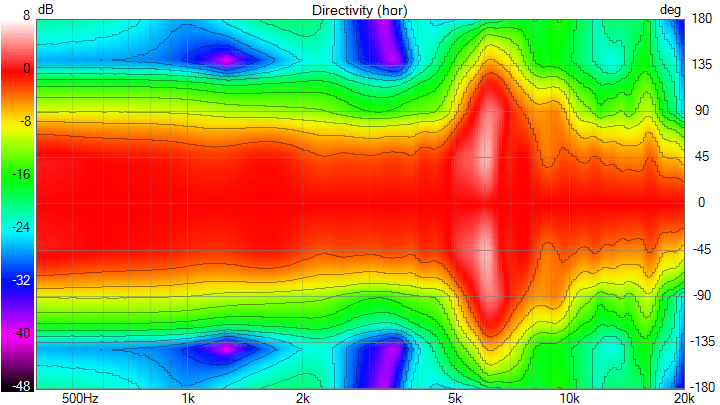
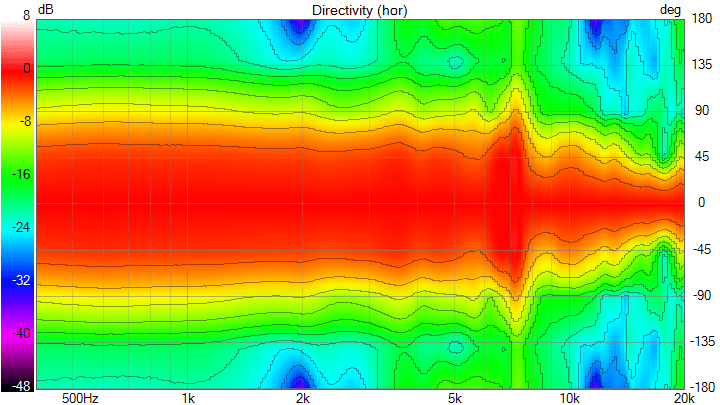
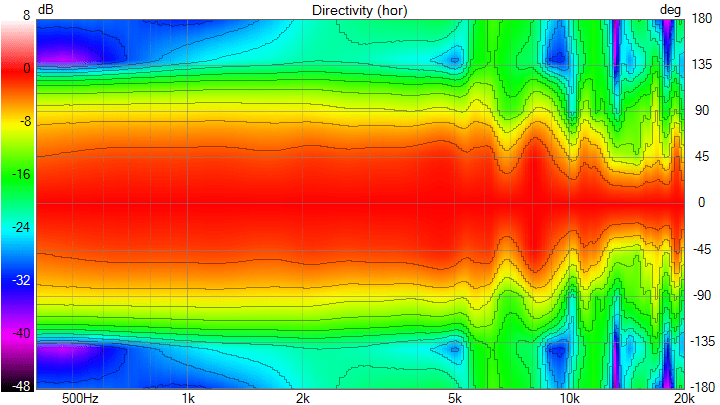
The C414 sets a great example with it’s configurable pickup pattern. The chardiod version shows clear focus towards 0° and a fall off further of axis. In contrast the superchardiod and figure 8 pattern show a smaller main lobe but side lobes off axis, as is to be expected.
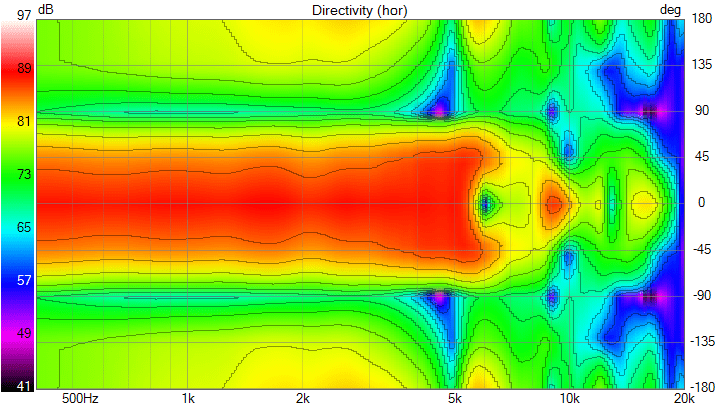
The measurements showed some clear problems with the avantone superchardiod capsule and lauten audio LS308, which have notches in the on-axis frequency response. This leads to artifacts in the normalization where the off axis response is increased above the chart limits. So I provided the not normalized versions, as well.
The clear winners for me are the SM7B, Lewitt Rex Dynamic, Audix D2 and D4. The LS308 looks great until you see the raw frequency reponse.

This mic has dual capsule design which Lauten Audio advertises as a “second order chardiod”. It is clear that the directivity is similar to a figure 8 with a lesser 180° lobe. However I think that the directivity of this microphone is much more complex and needs to be measured with more precision. The on-axis frequency response has severe limitions though…
In summary I think I need to measure with more precision, focusing on the promising microphones. Also a followup with real drums/sources with some listening examples is needed to evaluate if the charts can help choosing microphones in high bleed situations.
 Alpha Sonic Studio
Leave a comment