

The HX series of devices feature an IR Loader Block which can be used to apply convolution to your signal. Or – less boringly worded – simulate your mic’d guitar/bass cabinet sound. 🙂
In my other article I wrote about how the convolution program influences mostly the length and windowing of the IR. With that in mind let’s look at the IR block.

There are two IR blocks that either are 1024 or 2048 samples in length. Depending on your HW, if you want to use more than one IR block you are limited to 1024 per block. It seems that the maximum convolution length the HX stomp can handle is 2048. Apart from that you can select an IR that was previously imported, add low and high cut, adjust the dry/wet mix and the output level of the block. Seems straight forward enough – but how does it handle the IR import? How is a longer IR truncated?
To find out I created a 48000(48kHz sampling rate of the device = 1s) sample long IR full of white noise and I’ll convolute a dirac impulse with it to see what kind of windowing is applied to the IR.
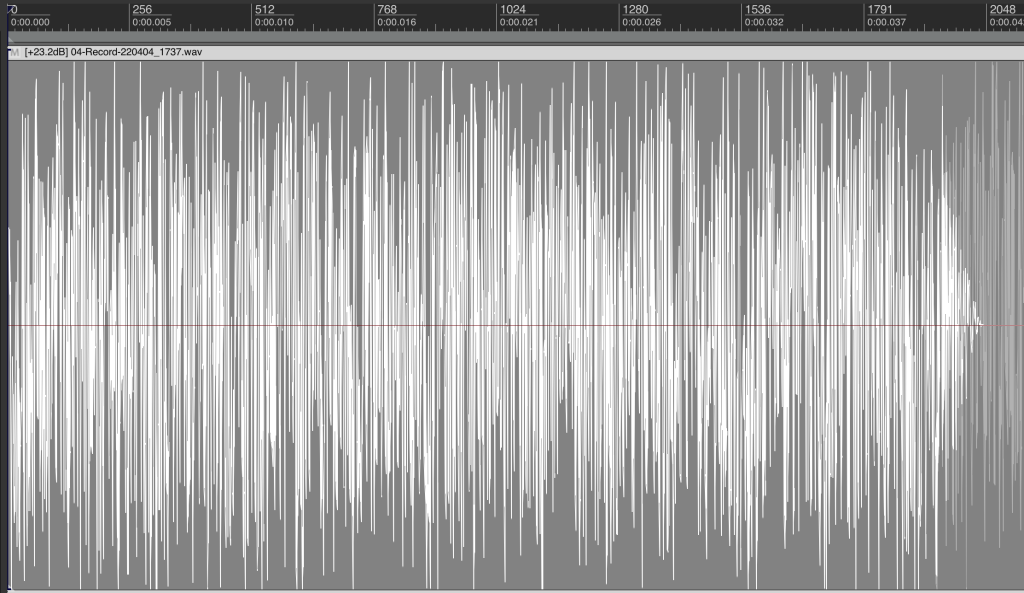
The IR seems fine – some windowing at the end and no truncation at the front.
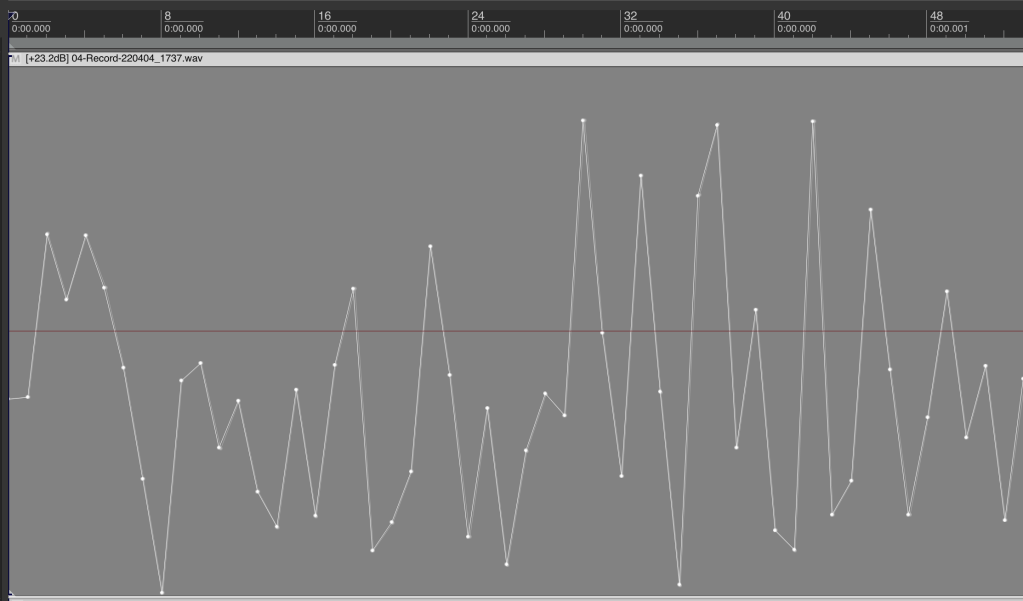
The start is unaltered and starts on the first sample of the IR. Keep on reading to find out if this happens with IRs containing silence before the peak.
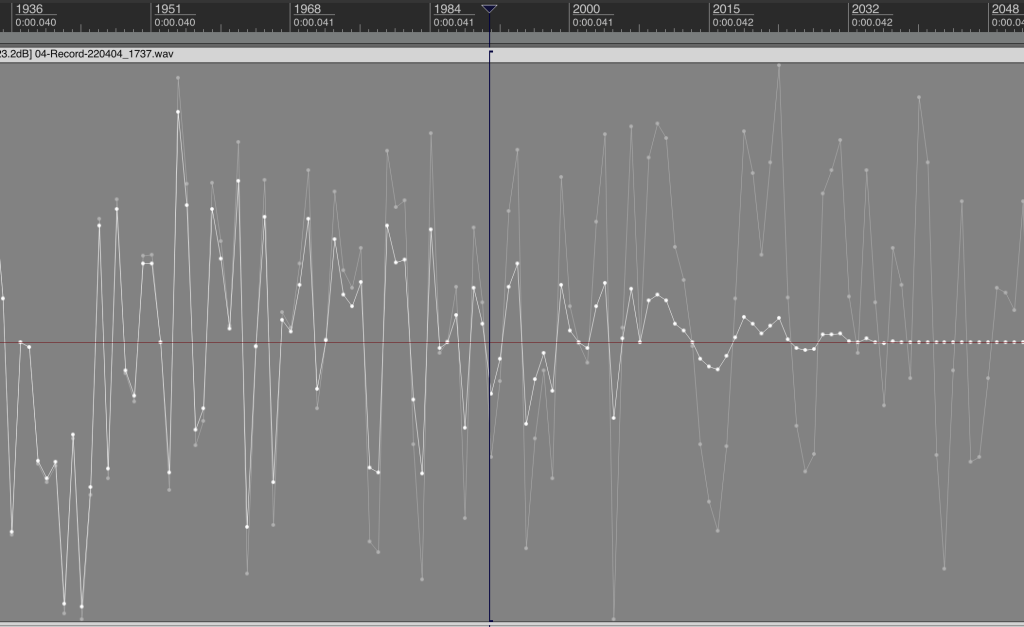
The right side window stars on sample 1939 and ends on 2044. That means only about 4 samples are wasted 😀 The window is 105 samples long which is about 2.2ms.
Let’s look at the 1024 sample block next.
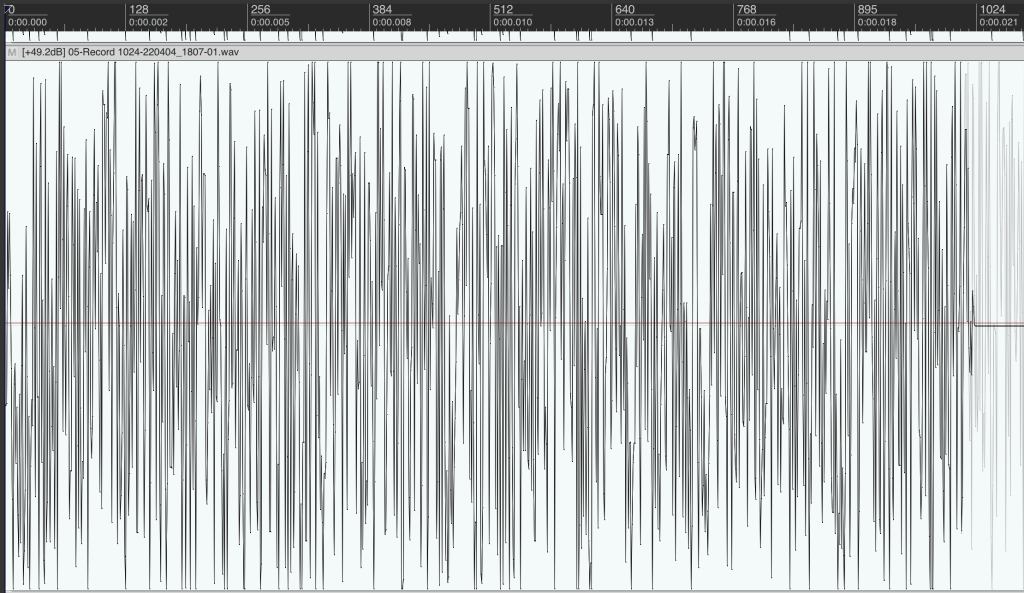
Waveform looks good – same behaviour but length is of course reduced.
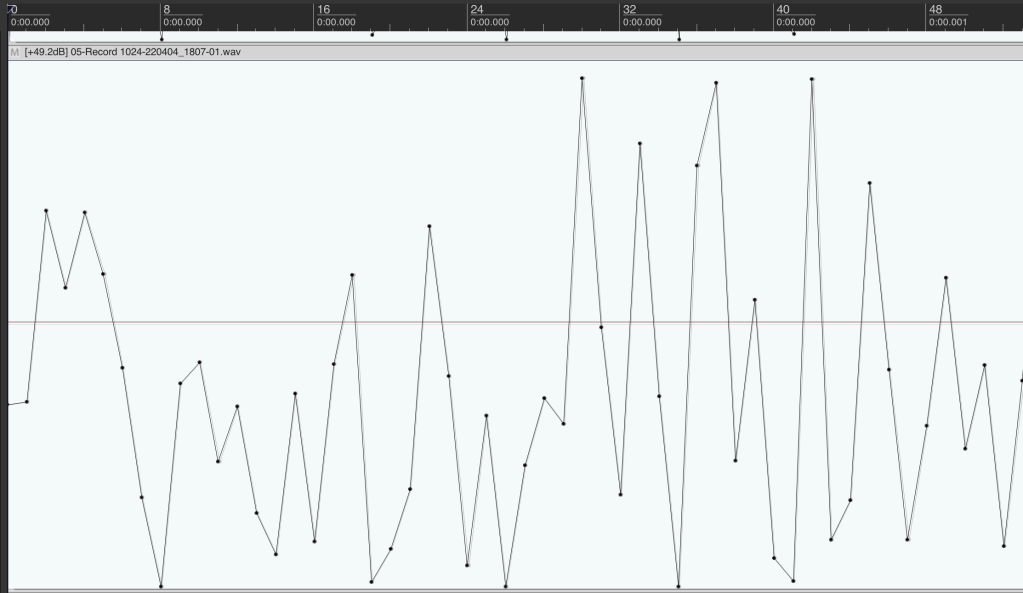
The start is unaltered as well.
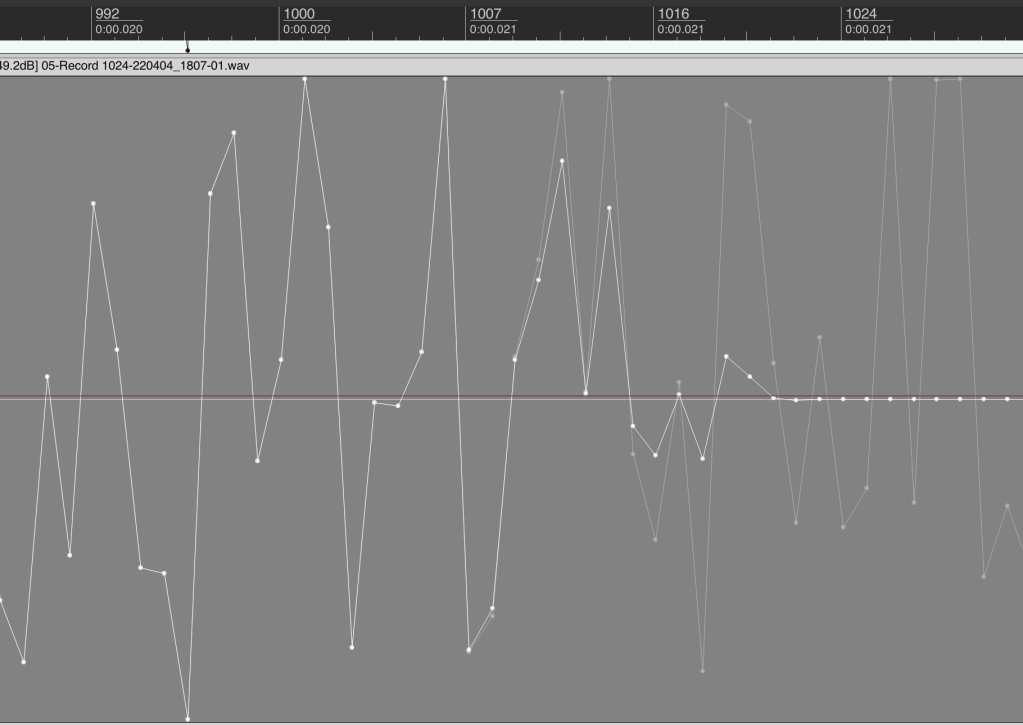
The window is short starting at 1009 until 1023 which is 14 samples (about 0,3ms).
So basically you don’t need to worry about the truncation. On import a right side window will be applied depending on the block length used. Either 2,2 or 0,3ms.
With that only up to 2048 samples or less the efficient usage of the length is important. Does one need the truncate the IR properly before importing? What if there is silence preceeding the IR? Lets import and actual IR with some silence before it.
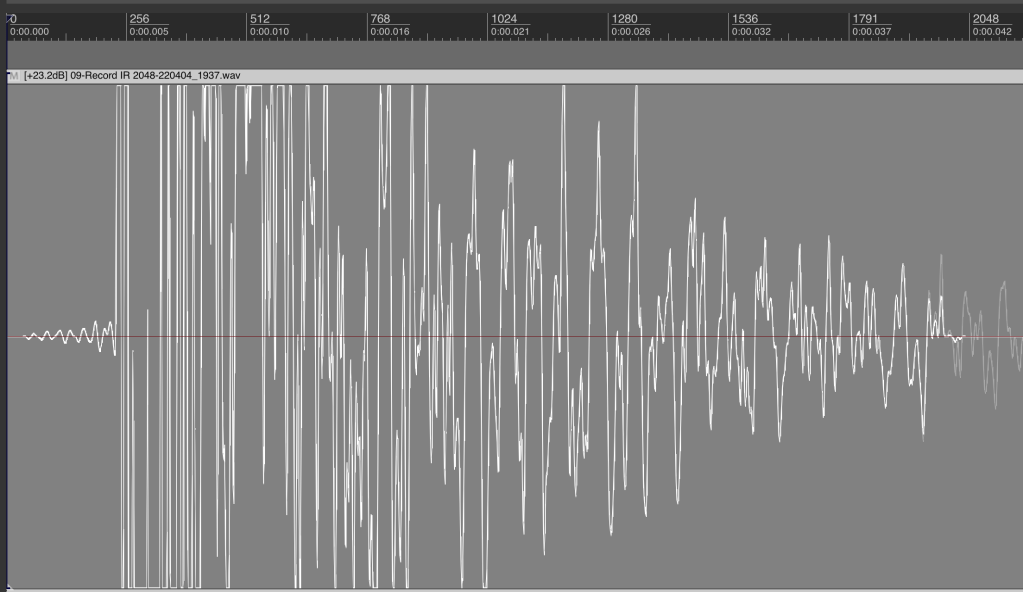
At first glance it looks like there is no difference at the start and the previously observed windowing at the end.
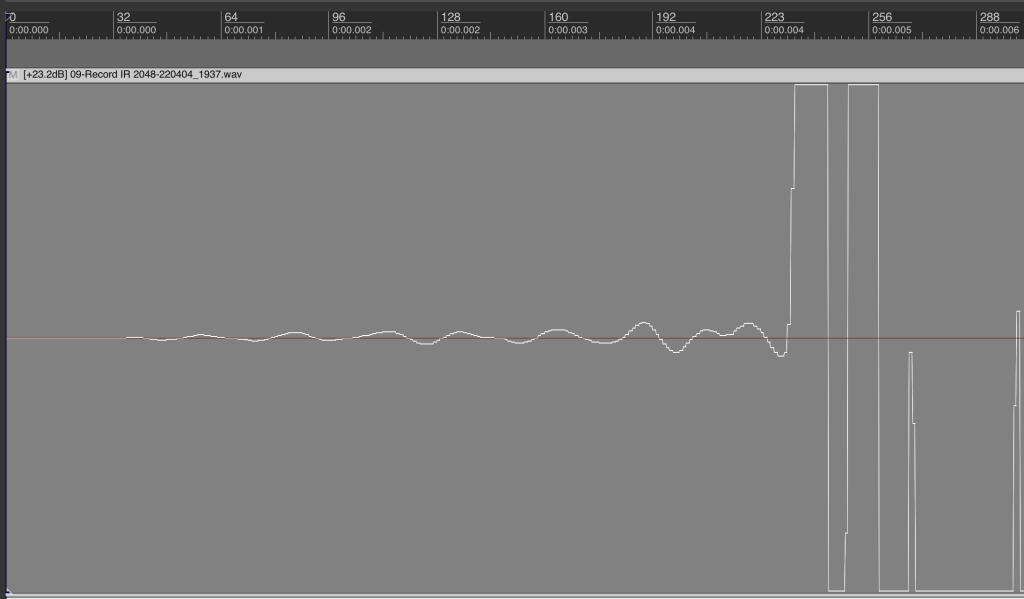
Yupp that’s no difference. Basically there is no peak detection or truncation at the start.
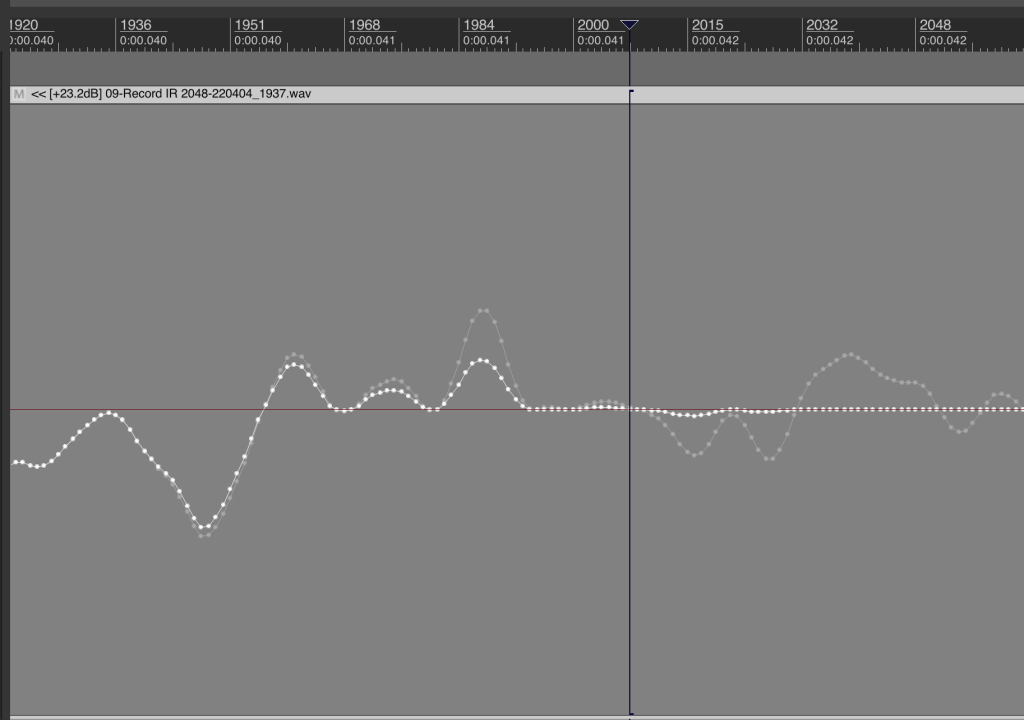
And the windowing at the end. Here you can see how this window looks on a real IR instead of white noise.
To summarize/tl;dr:
You don’t need to worry if the IR is too long. The importer will do a proper windowing at the end. The windowing will be less aggressive if you use the 2048 block – in general if your patch has enough ressources use the higher setting.
But you need to make sure that your IRs start as soon as possible. Do not leave pre silence! It will make your effective IR length shorter and introduce a delay as long as the pre silence. If absolute minimum latency is needed use the minimum phase version of an IR. It will not sound as realistic but it will start immediately.
That’s all for now. Make some music \m/
 Alpha Sonic Studio
Leave a comment