
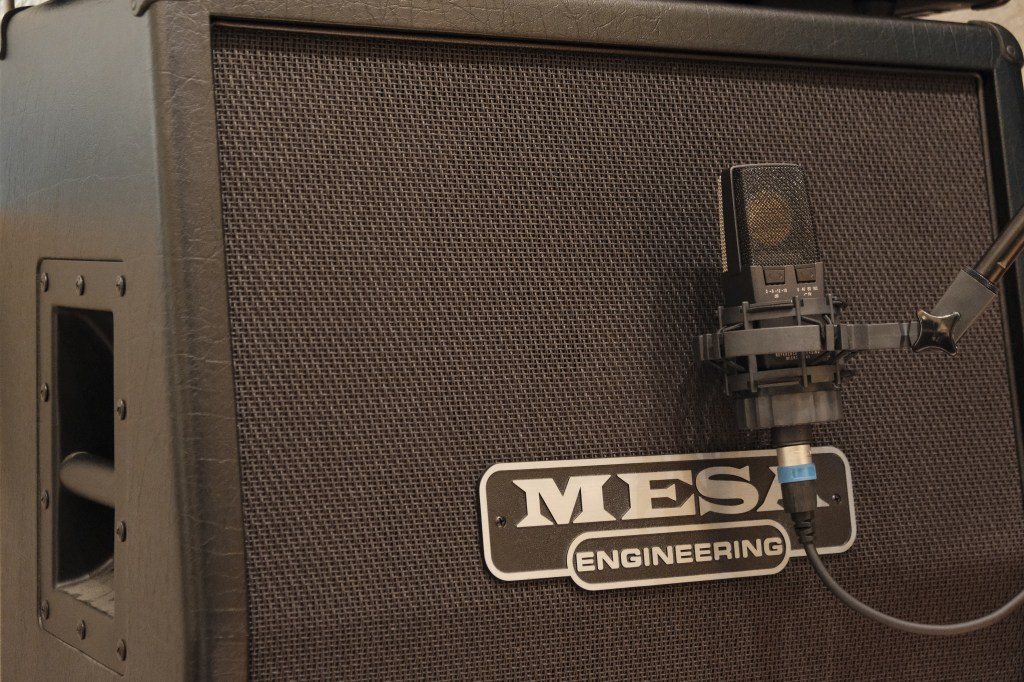
I have made some IRs from the vertical Mesa Boogie 2×12 with 16 Ohm V30 speakers with the method described here.
TL;DR:
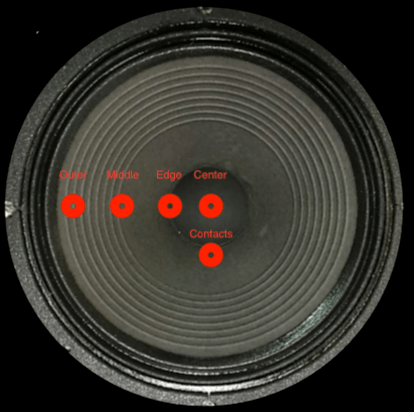
The picture shows the microphone position relative to the speaker that were used. Additionally the positions were also recorded at an approx. 45° angle towards the centre. For the center mic that means the microphone pointed away from the center. This way the off axis response of the microphone is featured instead.
You can get much more coverage if you do more positions but in my experience this is enough.
The microphone I used were the shure SM7b, sennheiser e906, beyer M201 and akg C414. For the SM7b all settings are flat. In the past I didn’t like the presence boost and the HPF can easily be done in the convolution plugin if needed. For the C414 I tried the omni, cardiod and hyper cardiod pickup patterns in each position. The omni mode angle position was omitted since, yes there is directionality in the high frequencies, I thought is was redundant. For the e906 I tried every position with the presence boost, cut or flat. I was really interested in how that microphone sounds since I have not used it on a guitar speaker yet. The M201 doesn’t have any settings that can be adjusted.
Before looking at the graphs: To increase visibility the graphs are smoothed either 1/6 or 1/12 of an octave. While this is inaccurate, one can identify trends more easily than exact differences.
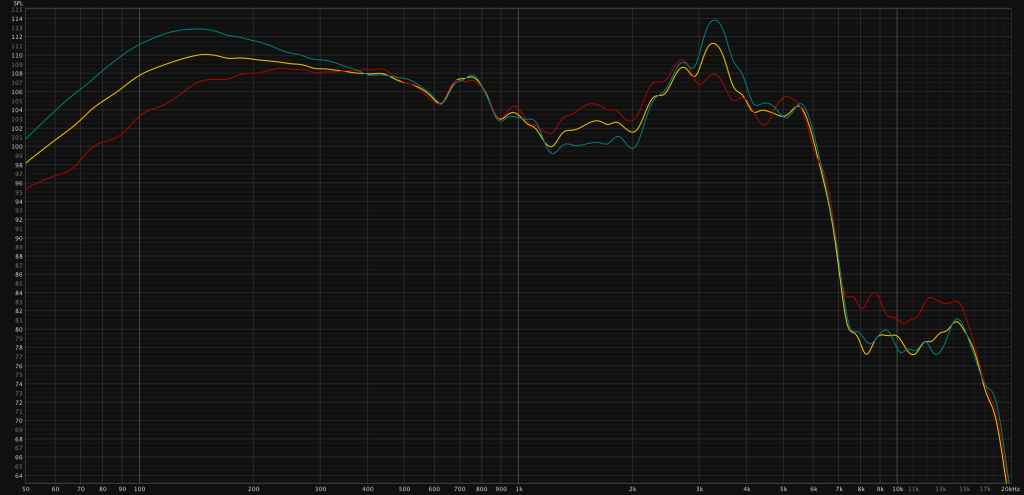
The polar pattern massivly changes the bass response because of the proximity effect. The effect works below 400Hz. In listening tests I was finding that I am very used to the cardiod bass response and like it the best. The omnidirectional pattern has the most even response but the >7kHz response can be a bit fizzy. The lack of bass and presence between 1-2kHz can be a bit harsh. The more directional patterns exhibit a spike around 3,4kHz which doesn’t sound nice but can be corrected with an EQ.
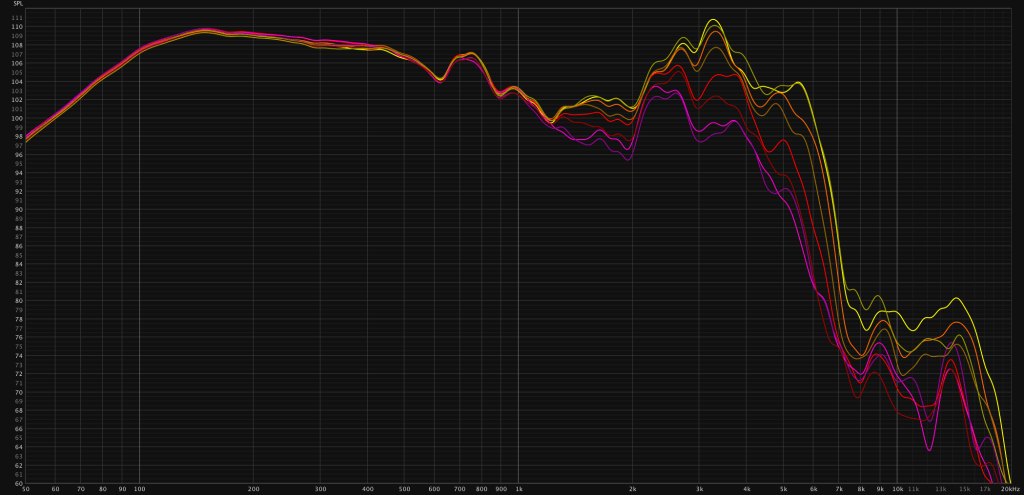
Basically the from 1,2kHz on the response drops the more the futher from the center the microphone is positioned. Angeling the microphone will have the same effect.
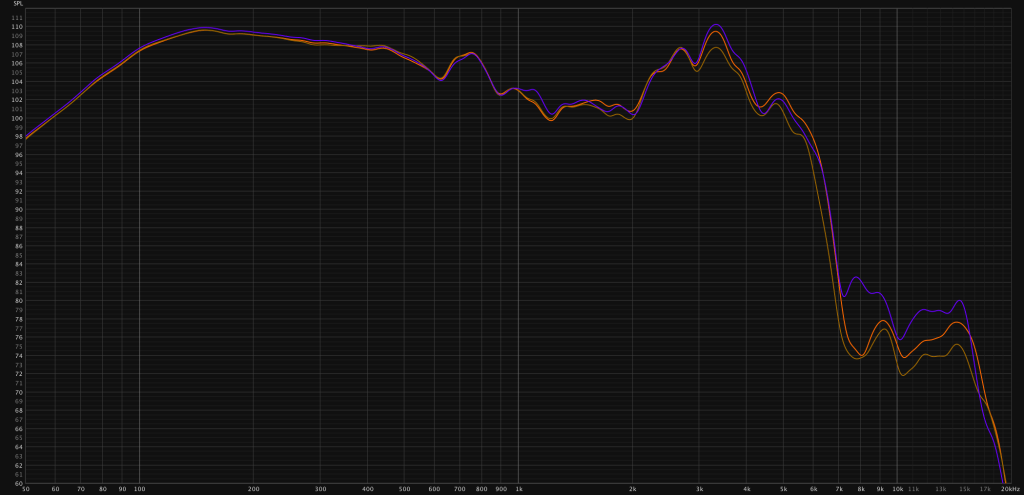
I have heard somewhere that micing the speaker where the wires are attached to the paper is better because it would sound less harsh. Well as far as I can tell that is not the case. The contacts position exhibits more high frequency content – expecially above 7kHz.
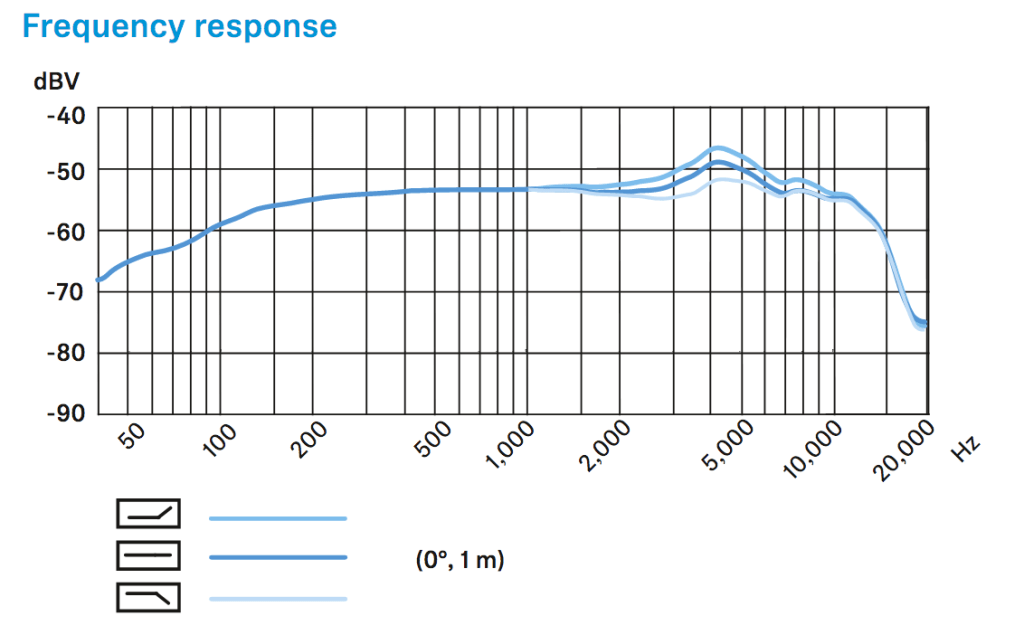
The sennheiser e906 has a eq function where you can either cut or boost some high frequencies.

So the observed frequency response changes match the manual. In my listening test the boost was almost always to much while the cut made the sound more neutral. The only exception were the boost sounds good(on my opinion) is if you point the microphone at the speaker outer position.
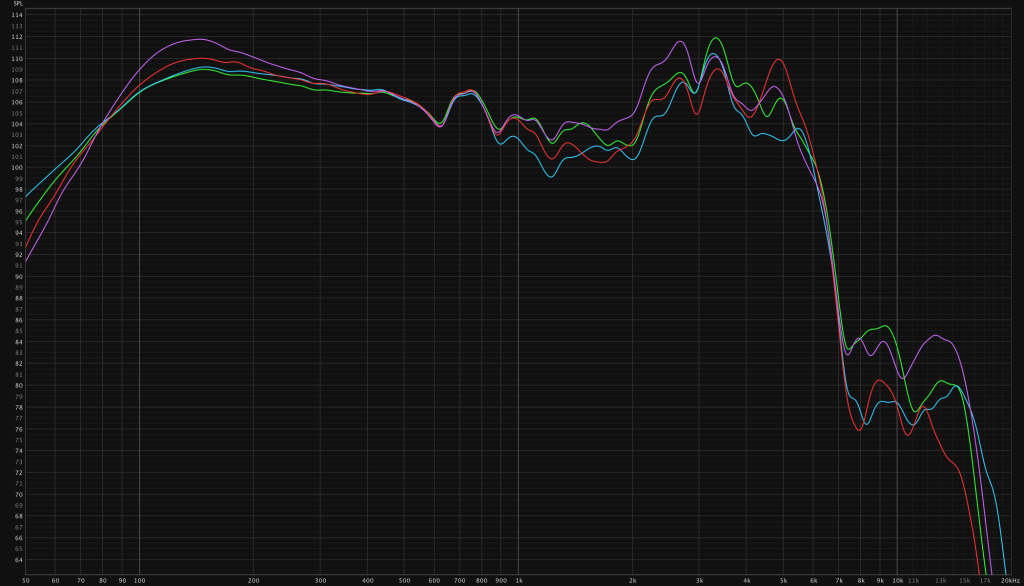
Starting with the bass response. The SM7b and C414(both cardiod) have a similar bass response, while the e906 and M201 have accentuated bass(both super or hyper cardiod). In listening tests I found the bass response of the M201 much. The rest of the frequency response differs so much, that really one needs to listen to the different IRs to make a judgement.
Download the IRs and have fun. Links are at the top 🙂
 Alpha Sonic Studio
Leave a comment